India at the Nagoya Asian Games: 85 Medals, 21 Golds, a Rising Cast — and a Host That Fumbled the Basics
India lost 20 of its 28 Hangzhou golds yet still finished fourth, powered by archery, boxing, hockey and a wave of first-time champions — while Japan’s no-village experiment drew apologies.
Compiled from live news data by NewzAI · October 4, 2026
The Headline Numbers
India’s Aichi-Nagoya campaign ended in fourth place with 85 medals, including 21 gold, after a late surge in the final days, according to NewzAI’s cluster of Times of India and The Hindu reports. Read on NewzAI →
The surge was dramatic. India sat 10th with 30 medals after Day 7, climbed to 63 by October 1, and then collected six golds on the penultimate day alone — women’s hockey, three boxers, an archer and wrestler Sujeet Kalkal — to reach 76 medals. Read on NewzAI →
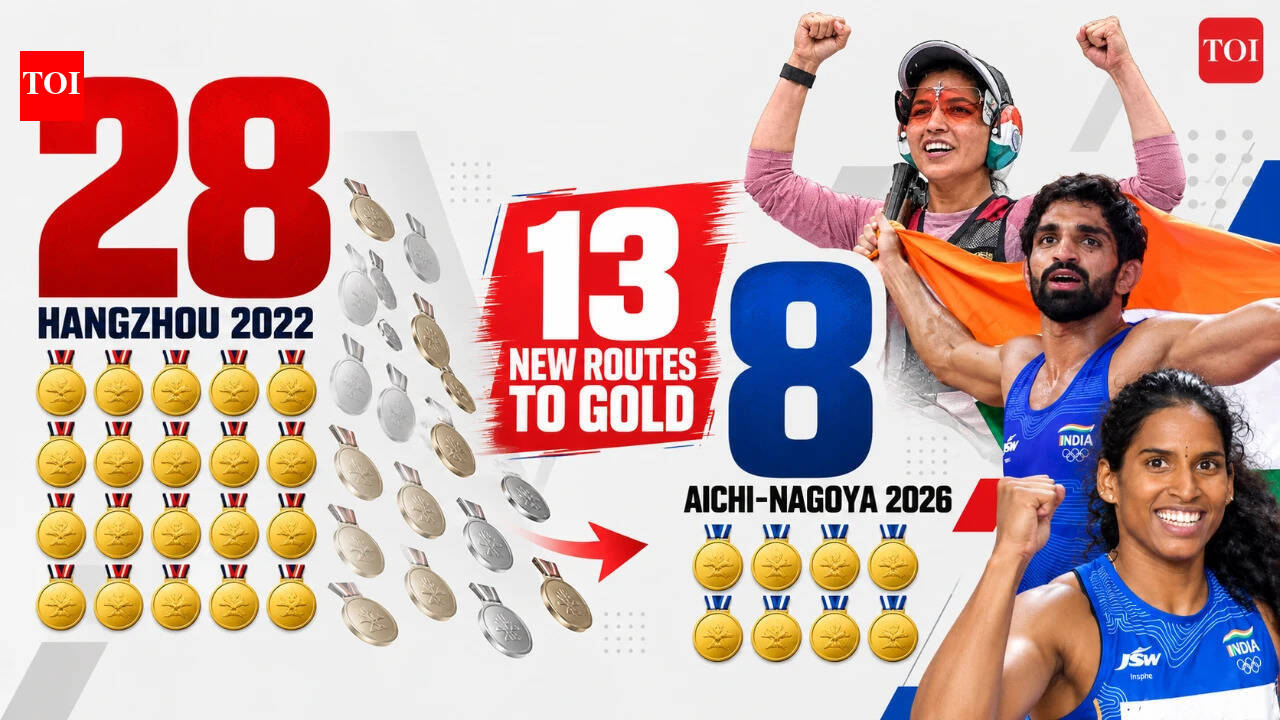
Image credit: Times of India
A Medal Map Redrawn, Not Repeated
India retained only 8 of its 28 Hangzhou golds (28.6%). All seven shooting golds changed hands, all six athletics titles went elsewhere, and neither individual compound archery gold was defended. Yet 13 of the 21 golds came in events where India had won silver, bronze or nothing four years earlier. Read on NewzAI →
The dependable core held: the three compound team archery titles, both kabaddi golds (the women beat Iran 37-34, the men 40-34), and both cricket titles. The men’s cricket final against Pakistan on October 3 completed what the Times of India called a rare double. Hangzhou’s gold was concentrated in shooting, athletics and archery, which together produced 18 of the 28 titles; the 2026 haul was spread far wider. Read on NewzAI →
Hockey and Boxing Carry the Final Push
The women’s hockey team beat defending champions China 1-0 to win Asian Games gold for the first time since 1982, a 44-year wait. The men beat Malaysia 5-1 to retain their crown for the first time, becoming only the second country after Pakistan to win consecutive men’s golds. Both teams booked direct qualification for the LA 2028 Olympics, and it was the first time both won gold at the same edition. Read on NewzAI →

Image credit: The Hindu / PTI
Boxing went from no gold in Hangzhou to three in a single day. Lovlina Borgohain beat China’s Ziyi Bao 5-0 in the 75kg final on her 29th birthday, ending a 12-year wait for a women’s boxing gold and becoming only the second Indian woman after Mary Kom to win it. “It was a very special birthday, I’m feeling really good,” she said. Parveen Hooda edged Paris Olympics bronze medallist Chen Nien-chin 3-2 for her maiden Asian Games gold, and Ankush Panghal beat South Korea’s Minseong Kim in the 80kg final. Read on NewzAI →
The New Faces
Neeru Dhanda, 27, was the shooting story: women’s individual trap gold, team silver with Manisha Keer and Aashima Ahlawat, and mixed trap gold with Kynan Chenai. She was named women’s flag bearer for the closing ceremony. Read on NewzAI →

Image credit: The Hindu / PTI
Gulveer Singh won silver in the 1500m and 10,000m and bronze in the 5000m, becoming the second Indian man and fourth Indian overall to take three athletics medals at a single Asian Games, after Lavy Pinto (1951), P.T. Usha (1986) and K.M. Beenamol (2002). Read on NewzAI →
Vithya Ramraj, a trucker’s daughter from Coimbatore, ran a personal best 54.75 in the 400m hurdles for bronze, breaking P.T. Usha’s 42-year-old national record of 55.42. She also ran in the women’s 4x400m relay quartet that won India’s only athletics gold. Read on NewzAI →
Elsewhere, Kumkum Mohod and Pranavi Urs (see below) headlined archery and golf, while Ganesh Mani Ratnam Thirumuru bounced back from a semifinal loss to win compound bronze with 14 of 15 arrows in the 10 ring. Read on NewzAI →
First-Time Winners
The medal map was littered with firsts, per the Times of India’s count:
- Pranavi Urs — first Indian woman to win Asian Games golf gold, and the first Indian golfer to win an individual title since Shiv Kapur in 2002.
- Kumkum Mohod — first Indian woman to win individual recurve gold; with Ankita Bhakat and Kirti Sharma, India’s first women’s team recurve gold.
- Suchika Tariyal — India’s first MMA medal (bronze, women’s traditional 60kg) in the sport’s Asian Games debut.
- Jay Meena — India’s first soft tennis medal (bronze) after two Games without a podium.
- Baranica Elangovan — first Indian pole vault medal.
- Sawan Barwal — first marathon medal since 1982, with a national record.
- Sarvesh Kushare — ended a 56-year high jump medal wait.
- Mirabai Chanu — first Indian weightlifting medal since 1998, completing her trophy cabinet.
- Anahat Singh — first Indian women’s singles squash silver.
The Disappointments
Shooting fell from 22 medals and seven golds in Hangzhou to 15 medals and three golds. Manu Bhaker, the Paris double Olympic medallist and opening-ceremony flag bearer, left without a medal after four events, finishing fifth in the 10m air pistol final. Her father Ram Kishan Bhaker told IANS her performance “was not as per her standard.” Esha Singh’s 25m pistol silver was a bright spot. Read on NewzAI →
Athletics went from six golds to one. Shot putter Tajinderpal Singh Toor, a two-time champion, produced a season’s best 20.64m but took silver behind Iran’s Mohammadreza Tayebise’s Games record 20.81m. Read on NewzAI →
The sharpest flop was tennis: no medals, ending a 36-year streak and India’s first medal-less tennis campaign since 1986. Badminton fell from three medals to one, rowing from five to one, equestrian from two to none (hit by selection disputes and the lack of an approved show-jumping team), and squash lost both of its Hangzhou golds. Read on NewzAI →
Japan’s Hospitality and Onboarding Failures
To cut costs, Japan scrapped the traditional athletes’ village. Some 17,000 athletes and officials — more than at an Olympics — were instead put in hotels, temporary wooden container-style huts and the cruise ship Costa Serena. Read on NewzAI →

Image credit: The Hindu / Reuters
The problems stacked up quickly:
- Teams said rooms lacked storage space and beds were too short.
- Some athletes were stranded for hours at the airport; buses failed to run, didn’t turn up or went to the wrong venues.
- India’s traditional team welcome and flag-hoisting ceremony at Nagoya Port Garden Pier was delayed and then halted after organisers cited unspecified “trouble” involving a team.
- North Korea’s anthem was played by mistake for South Korea’s men’s hockey team; the Korean coach called it “a really serious problem.”
- On opening day, India had to drop Tajinderpal Singh Toor as flag bearer after his luggage lacked his ceremonial kit; kabaddi’s Pawan Sehrawat stepped in.
India moved athletes from the huts into hotels. “We have booked hotels for our athletes here,” chef de mission Sahdev Yadav told AFP. “But if the hotel rooms fall short then yes, we have Indian households here on standby.” The Indian embassy reportedly helped reach out to around 2,000 families in Nagoya. Read on NewzAI →
On September 30, Nagoya Mayor Ichiro Hirosawa, acting chairman of the organising committee, apologised: “We must sincerely reflect on the mishandling that occurred. There were human errors and a lack of communication with the national teams.” Read on NewzAI →
Japan Olympic Committee chief Seiko Hashimoto conceded “there were many problems” but said harsh criticism “isn’t the whole story,” pointing to praise for the cruise ship’s food and volunteers, and to typhoons and heavy rain that disrupted schedules. Japan finished with its highest-ever medal count, behind China. Read on NewzAI →
The Bigger Picture
The Times of India’s own verdict is that India proved depth in high-pressure team events but still struggles to convert talent into gold consistently. Traditional strengths didn’t vanish — shooting (15), athletics (24) and archery (9) still produced medals — they just produced fewer golds. With both hockey teams already qualified for LA 2028 and a long list of first-time medallists, the pipeline looks broader if less top-heavy.
What to Watch
Watch whether federations fix the gaps exposed here — tennis, rowing, equestrian selection and badminton’s individual depth — and whether the Asian Olympic bodies take lessons from Japan’s no-village experiment, which Hashimoto herself framed as a learning exercise for future Games.
Follow This Story on NewzAI
NewzAI tracks breaking news in real time — summarised from multiple sources so you get the full picture, not just a headline.
India’s Asian Games medal map changed: 20 Hangzhou golds gone, 13 new routes to gold →
Nagoya Mayor says sorry for Asian Games ‘inconveniences’ →
Three golds in a day! Ankush completes Indian boxing hat-trick →